Case studies

Smart restroom operations across expressway service areas for Guangdong Communications Investment

Delivered in 2024. Five service areas built to the same pattern. One site has 220 stall sensors, 2 hosts and 6 guide screens of 43 inches; about 1,100 stall sensors across five.

  • Our role: Equipment and platform supply
  • Delivered 2024
  • Expressway service area

Project overview

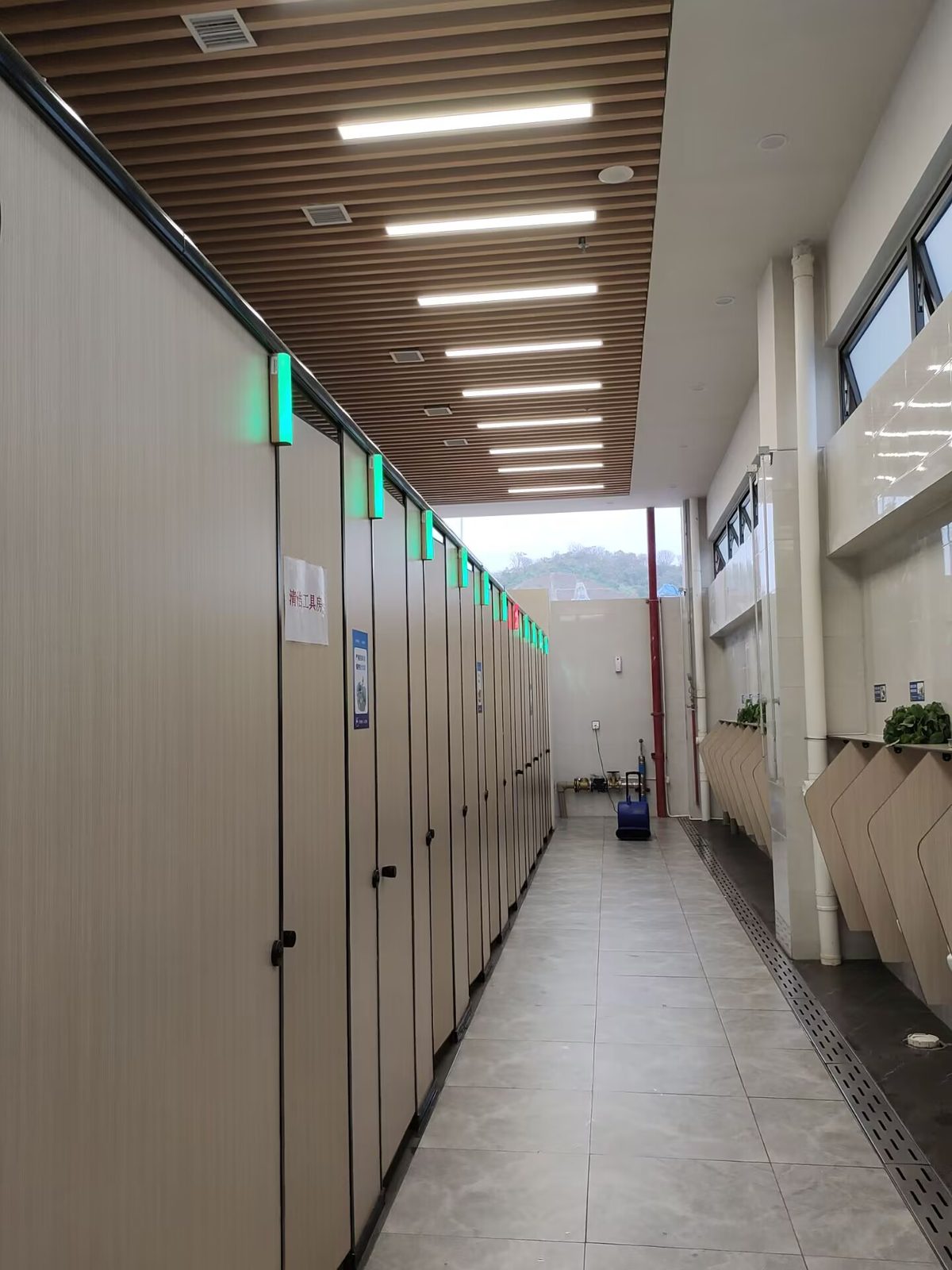
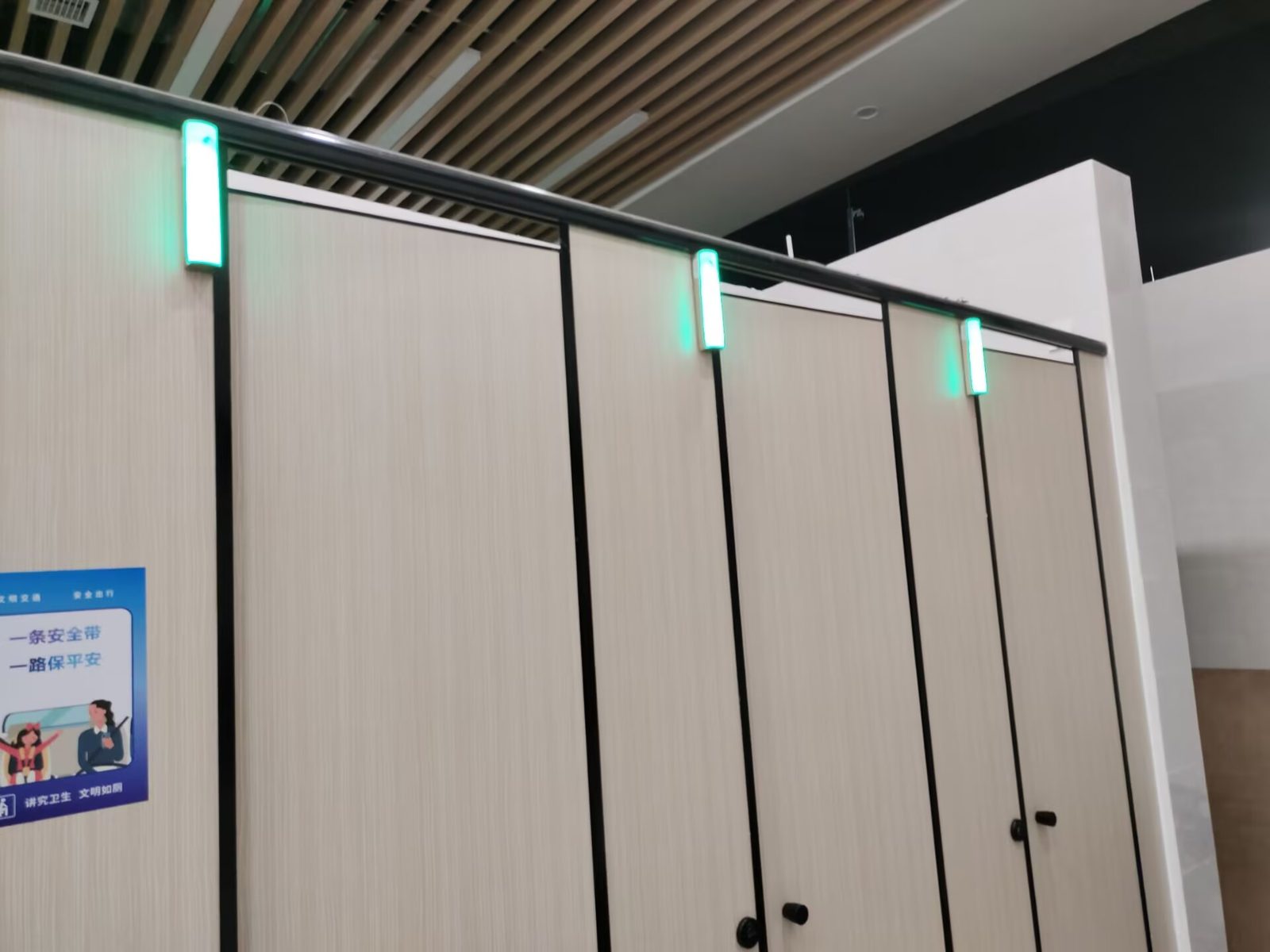
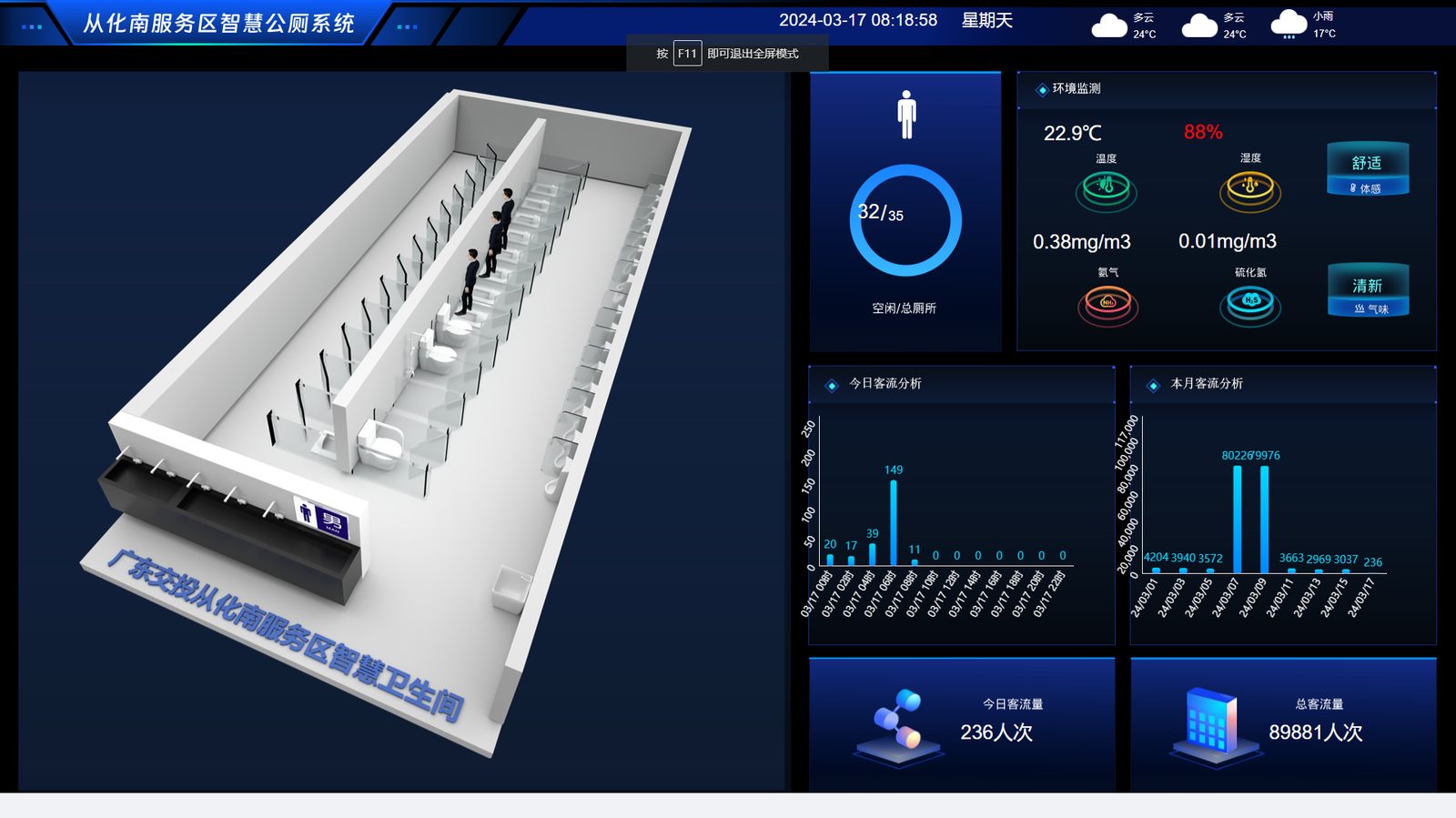
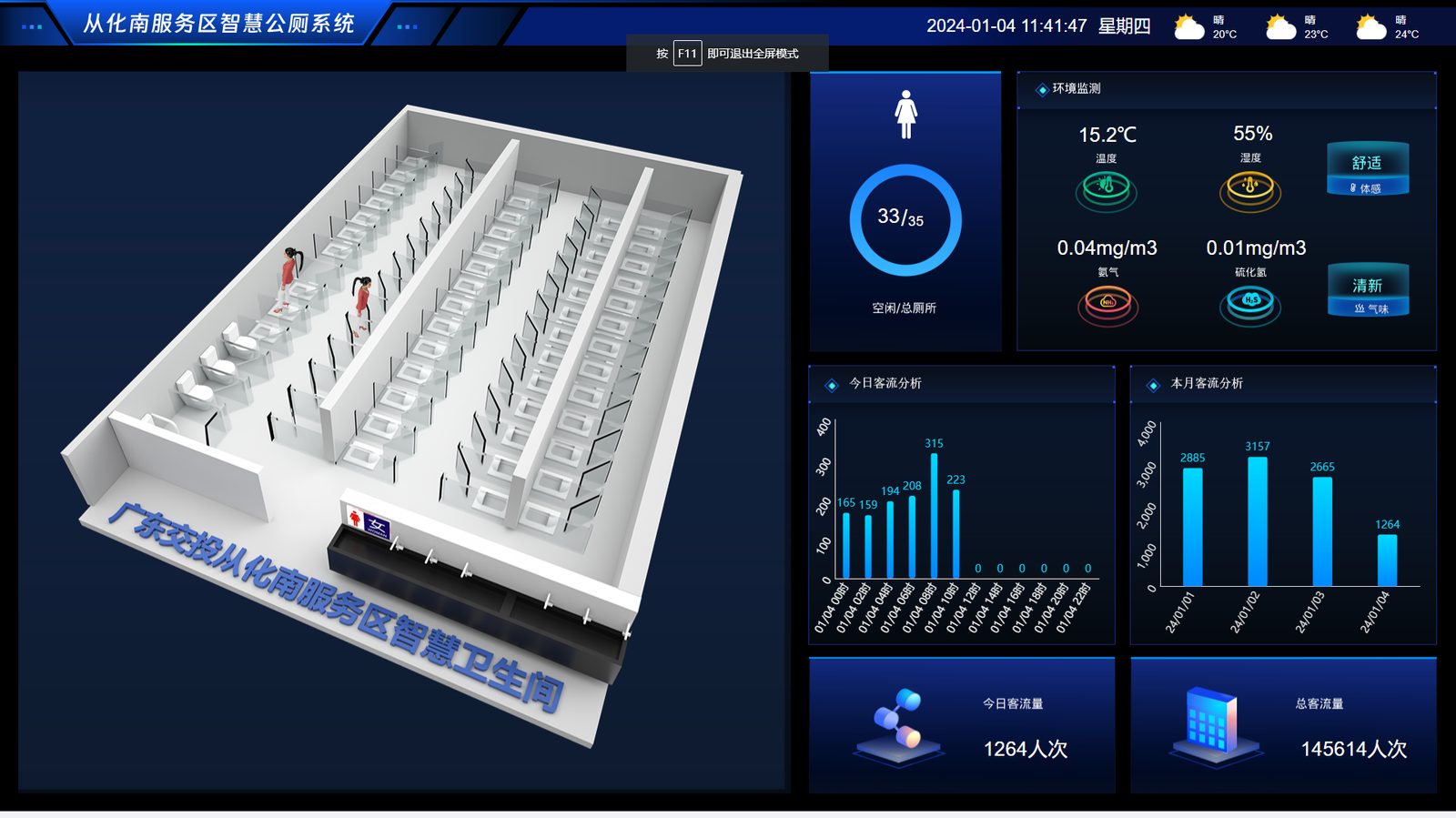
In 2024 Tongwei supplied smart restrooms for several expressway service areas run by Guangdong Communications Investment. Passing traffic rises on holidays, restrooms sit in the service building, and one site alone has more than two hundred stalls, more than the on-site shift can watch. Five service areas use the same pattern. Buried stall sensors detect occupied or free and can interlock flushing and exhaust; LED indicators show occupancy outside. Air sensing covers temperature, humidity, ammonia, hydrogen sulphide and illuminance. Entrance counters use stereo counting for entries and exits, without treating faces as the managed object. Water level and pressure are measured separately, so leaks and pressure faults are not found only in the pump room. Each site has two management hosts, concentrators for relay interlock, and six 43-inch screens at the doors. Guide screens at sites such as Conghua South show free stalls for the men's and women's rooms, with temperature, humidity, ammonia, hydrogen sulfide and footfall. All five join one platform, so headquarters sees occupancy, odour, footfall and water by site, and alarms reach the duty staff without asking along the expressway.
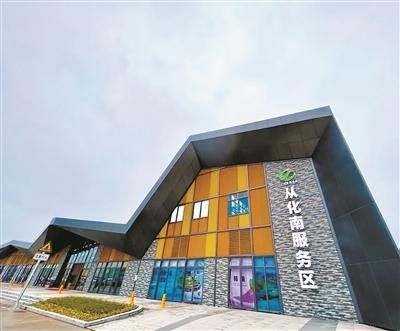
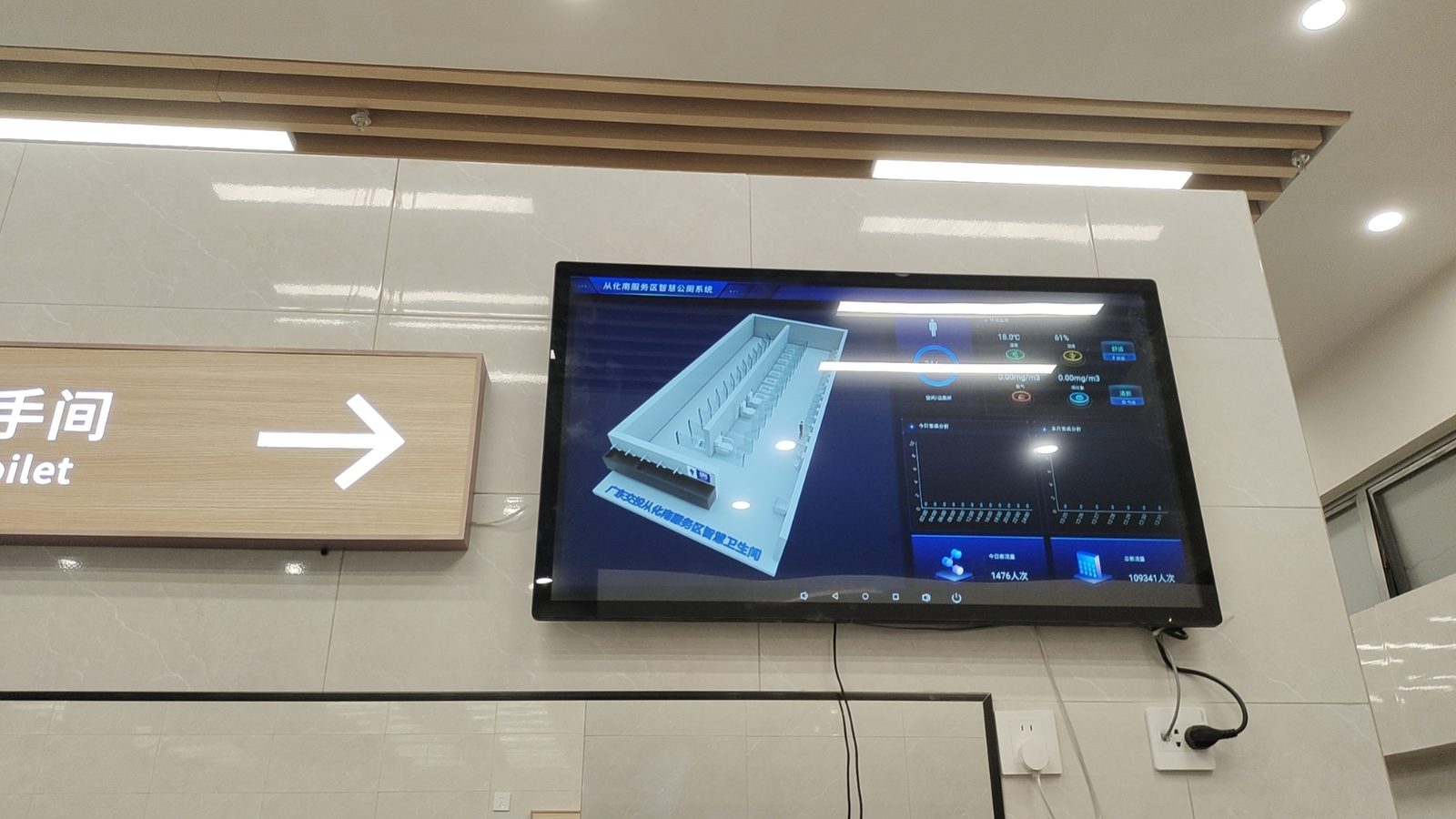
On site

Main functions delivered

  1. Stall guidance: 220 buried sensors and 220 indicators per site, about 1,100 across five; sensors can interlock flush and exhaust
  2. Air: 6 sensors per site, about 30 across five, for temperature, humidity, ammonia, hydrogen sulphide and illuminance
  3. Footfall: 4 stereo counters per site, about 20 across five, counting entries and exits
  4. Water: 2 level and pressure sets per site, about 10 across five
  5. On-site interlock: 2 hosts and 14 concentrators per site; about 10 hosts and 70 concentrators across five
  6. Door guidance: six 43-inch screens per site, about 30 across five, showing stall status
  7. One headquarters platform: occupancy, odour, footfall and water by service area

Project list

The list is published without prices or contacts.

Guangdong Communications Investment, one service area

Category Item Model Qty Use
Stall Infrared squat sensor TW-HID12 220 Buried in the wall; occupancy, and can interlock flush and exhaust
Indicator Stall LED indicator TW-TIL20-485 220 Shows occupancy outside the stall
Environment Air-quality sensor TW-WES10-A 6 Temperature, humidity, ammonia, hydrogen sulphide and illuminance
Footfall Stereo footfall counter Stereo counting 4 Counts entries and exits
Water Water level and pressure Level / pressure 2 Leaks and abnormal pressure
Host Smart management host BEC2000 2 Cabinet included; aggregates this site
Interlock Data concentrator IOC10-6 14 Relay interlock
Display Stall status guide screen 43 inch 6 Stall status at the door
Power Indicator power supply DC12V 4 Powers the indicators
Distribution Distribution box Custom 2 Power distribution on site

Guangdong Communications Investment, five service areas combined

Category Item Model Qty Use
Stall Infrared squat sensor TW-HID12 About 1,100 Five sites to the same pattern
Indicator Stall LED indicator TW-TIL20-485 About 1,100 Shows occupancy outside the stall
Environment Air-quality sensor TW-WES10-A About 30 Temperature, humidity, ammonia, hydrogen sulphide and illuminance
Footfall Stereo footfall counter Stereo counting About 20 Counts entries and exits
Water Water level and pressure Level / pressure About 10 Leaks and abnormal pressure
Host Smart management host BEC2000 About 10 Two per service area
Interlock Data concentrator IOC10-6 About 70 Relay interlock
Display Stall status guide screen 43 inch About 30 Stall status at the door
Platform Smart restroom platform TW-SmartView 1 Occupancy, odour, footfall and water for five service areas

The problem

Guangdong Communications Investment's service areas sit far apart along the expressway, and holiday traffic arrives at once. One site has many stalls; cleaners learn it is full only at the door. Headquarters needs occupancy, odour, footfall and water across several sites, without posting someone at each.

What we connected

  • Buried stall sensing, flush and exhaust interlock, indicators outside
  • Temperature, humidity, ammonia, hydrogen sulphide, illuminance and stereo footfall
  • Water level and pressure
  • 43-inch stall guide screens and a multi-site platform

What we did

  • Prove stalls, air, footfall, water and guide screens at one service area, then copy the same list to the others
  • Hosts stay at the service area; headquarters watches the platform, so guidance and interlock do not depend on calling the site
  • Five service areas share one platform, alarms route by site, and fewer empty trips are made along the expressway

How it was rolled out

  1. Confirm stall counts, male and female rooms, and power and network in each service building
  2. Finish sensing, indicators, air, footfall, water and guide screens at one service area first
  3. Build the other sites to the same list, then join all five to one platform

Outcome

  • Drivers see free stalls on the guide screen before walking in, instead of finding a full restroom inside the building
  • Odour, footfall and water level reach duty staff first, so holidays do not depend only on walking the site
  • Five Guangdong Communications Investment service areas share one platform for occupancy and water, so headquarters does not ask site by site

If your site is similar

Send the number of service areas, stalls per site, whether male and female rooms are in separate buildings, and whether headquarters should see every site on one platform.

Smart Restroom

Other cases in this scenario

Case studies

Municipal restrooms

Star-rated public restrooms in Tianhe, Guangzhou

Tianhe's restrooms are busy, so odour, wet floors and finding a free stall depend on cleaners watching. Sound-activated lights can go out while a stall is still occupied; missed flushes and unwashed floors mean complaints arrive before detection.

Transport hub

Smart restrooms at Guangzhou Baiyun Airport terminal

Baiyun Airport's terminal traffic is concentrated, so toilet paper and hand soap run out before stalls do. Cleaners refill on a fixed route, remaining stock is invisible, and passenger complaints arrive first.

Scenic area / park

Smart restrooms at Xiezhou Guandi Temple, Yuncheng, Shanxi

Restrooms at Xiezhou Guandi Temple sit along the visitor route, and holiday traffic arrives all at once. Cleaners learn a room is full or smelly only by walking there, and visitors learn there is no free stall only at the door.

Public venue

Smart restrooms at Guangdong Science Center

Traffic through the galleries, cinemas and public areas at Guangdong Science Center is uneven. Study seasons and holidays can reach tens of thousands of visitors in a day, and restrooms sit on several floors. Cleaners learn a room is full or smelly only at the door.

Healthcare

A provincial-capital central hospital (confidential)

At this central hospital, peak-hour stall vacancy is unclear, and cleaners learn a room is busy only at the door. Corridor no-smoking rules depend on patrols, cleaning attendance is unrecorded, and facilities staff need restrooms, smoking alerts and cleaning on one screen.

Next step

If your site is similar

Send the number of service areas, stalls per site, whether male and female rooms are in separate buildings, and whether headquarters should see every site on one platform.

Can this equipment be connected?

Three fields are enough. Leave a phone number; we reply within 4 working hours.

Add more detail