Case studies

Smart restrooms at Xiezhou Guandi Temple, Yuncheng, Shanxi

Delivered in 2021. Restrooms sit along the visitor route. About 10 restrooms and 120 stalls first, then about 14 more. Occupancy, air, footfall, entrance guidance and deodorising share one platform; visitors can see nearby free stalls on a phone.

  • Our role: Equipment and platform supply
  • Delivered 2021
  • Scenic area / park

Project overview

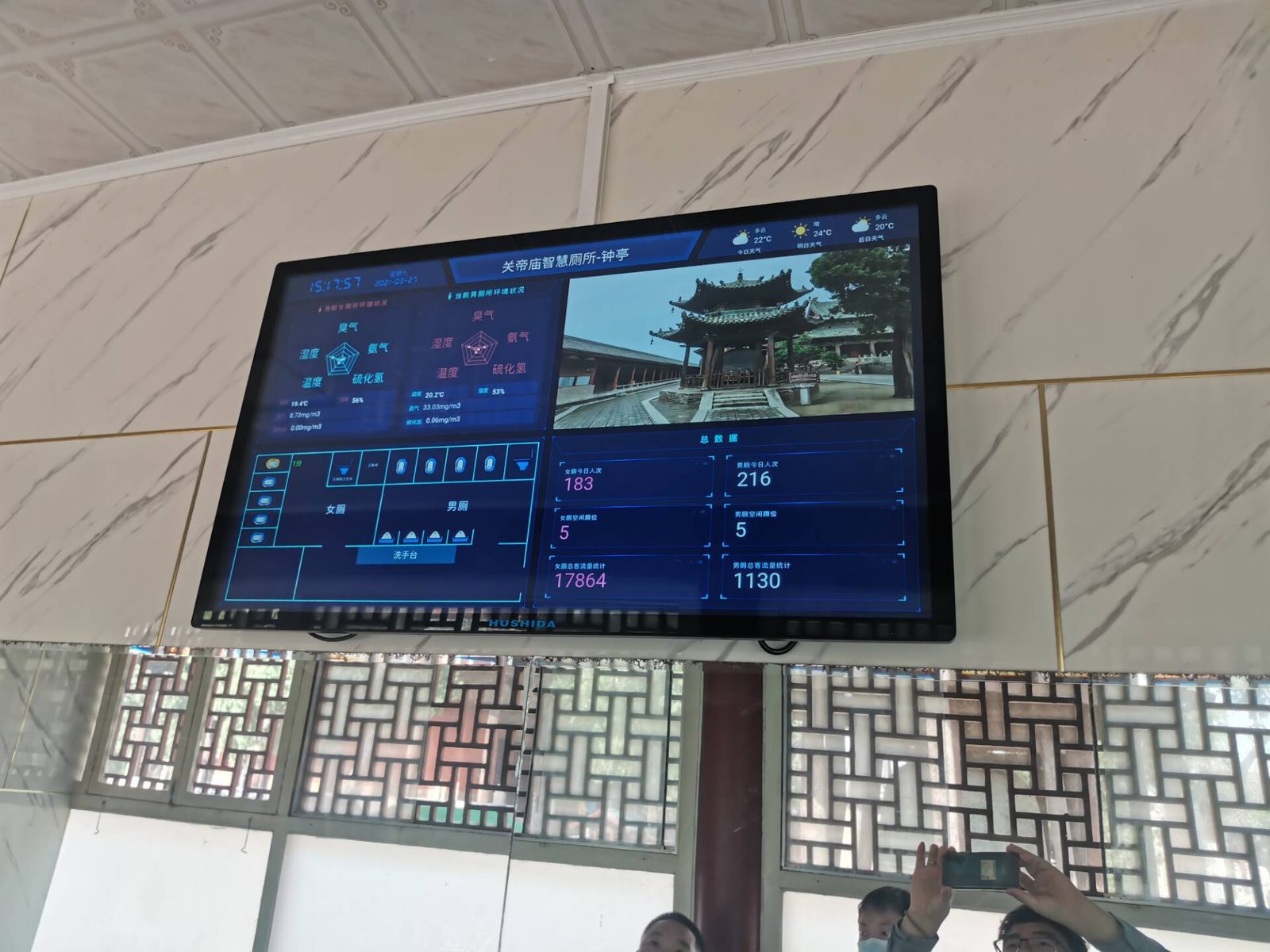
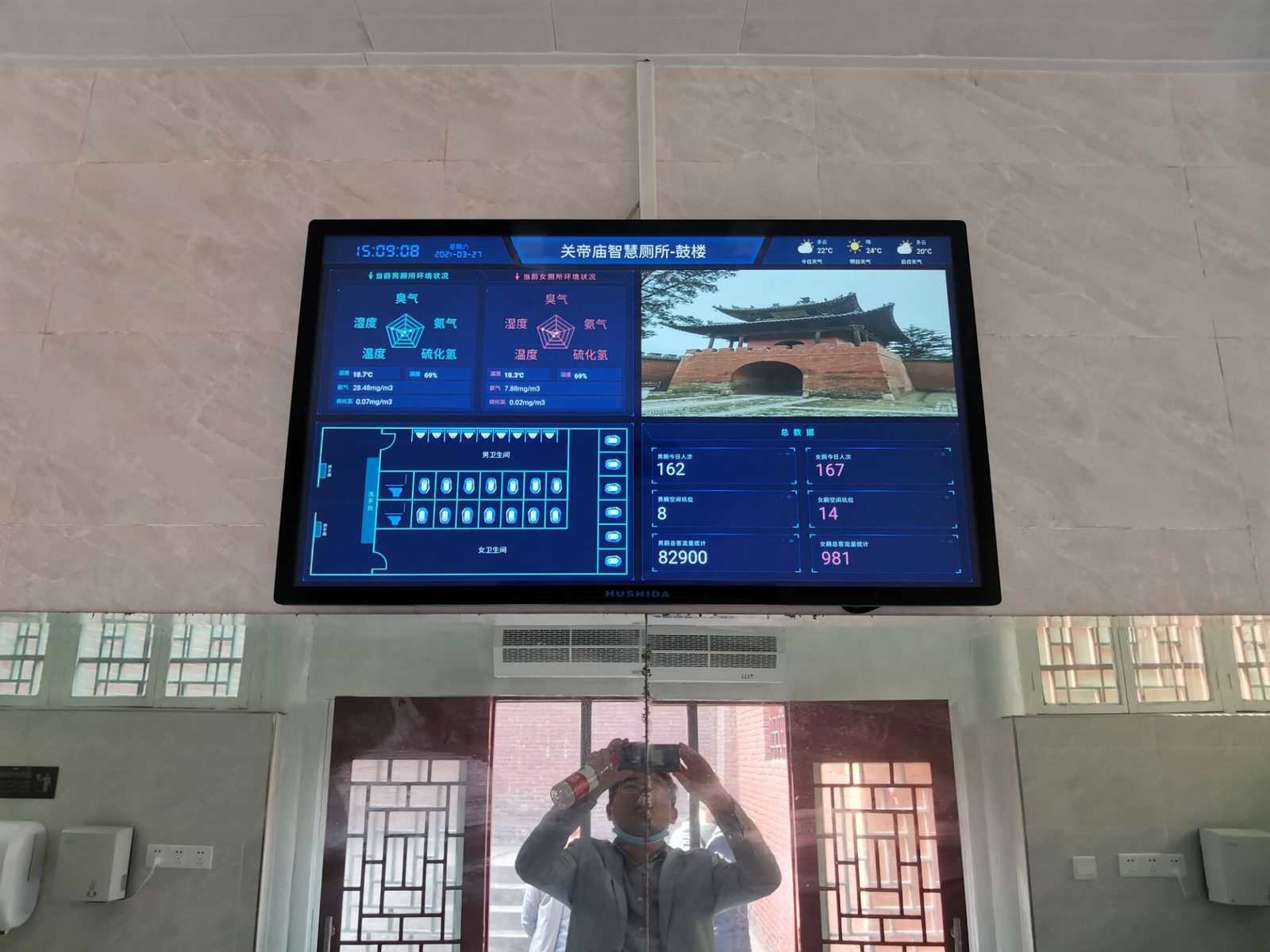
In 2021 Tongwei supplied the smart-restroom scheme for the Xiezhou Guandi Temple scenic area in Yuncheng, Shanxi. The restrooms sit along the visitor route; the hard part is distance and peaks. The first phase covers about 10 restrooms and 120 stalls with wireless occupancy and indicators, entrance footfall counts, and combined environment sensing for temperature, humidity, ammonia, hydrogen sulphide and particulates. Entrance screens show free stalls, air quality and footfall, including the rooms at the bell pavilion and the drum tower. The host acquires and interlocks on site, so guidance still works if the platform link drops. A later phase adds about 14 restrooms, using laser ranging and door screens for occupancy, plus ion deodorising, water and electricity metering, smoke, emergency call, satisfaction ratings and cleaner attendance. A 50-inch guide screen sits at each door, with information screens elsewhere in the grounds. One cloud platform joins both phases. A visitor mini-program lists nearby restrooms and free stalls by distance, and the same data can feed the scenic-area screen. On holidays, cleaning follows footfall, odour and vacancy alarms instead of walking every room.
On site

Main functions delivered

  1. Stall guidance: about 120 wireless stalls first, then about 370 laser sensors and 300 door screens, so visitors see free stalls before walking in
  2. Air: male and female rooms sense temperature, humidity, ammonia, hydrogen sulphide and particulates; odour breaches drive cleaning or deodorising
  3. Footfall: entrance counts show which restrooms suddenly get busy on holidays
  4. Works on site: the host decides and interlocks locally, so indicators and guidance continue if the platform link is weak
  5. Deodorising and energy: later restrooms have deodorisers plus water and electricity reads for peak consumption
  6. Help and safety: accessible-room emergency buttons drive alarm lights; smoke alarms separately
  7. Operations and visitors: cleaners clock in by card, satisfaction screens collect ratings; the mini-program shows nearby free stalls by distance, and the scenic-area screen can use the same data

Project list

The list is published without prices or contacts.

Xiezhou Guandi Temple, phase one, about 10 restrooms

Category Item Model Qty Use
Host Smart management host BEC1000 10 4G aggregation; local interlock continues if the platform drops
Stall Wireless stall sensor TW-HED30 124 Battery powered; detects occupied or free
Indicator Stall indicator TW-TIL10-L 124 Shows occupancy outside the stall
Environment Combined environment sensor TW-WES10 20 Temperature, humidity, ammonia, hydrogen sulphide, particulates and illuminance
Footfall Entrance footfall counter TW-HCS10 20 Counts entries without filming faces
Display Entrance display Stall and air guidance 10 Shows free stalls, air quality and footfall

Xiezhou Guandi Temple, phase two, about 14 added restrooms

Category Item Model Qty Use
Host Smart control cabinet BEC2000 14 One per restroom; power, comms and guidance software on site
Stall Laser stall sensor Laser ranging About 370 Detects occupied or free
Indicator Door indicator screen Occupied / free About 300 Shows occupancy on the stall door
Environment Five-in-one environment sensor TW-WES10 28 Temperature, humidity, ammonia, hydrogen sulphide, PM2.5
Footfall Entrance footfall counter Stereo counting 14 Counts entries and exits
Deodorising Ion deodoriser Wall-mounted deodoriser 24 Clears odour in male and female rooms
Metering Smart water / electricity meters Remote reading 14 each Totals water and electricity per restroom
Help Wireless help button and alarm light TW-SOSBL 14 each Emergency call in accessible rooms
Safety Smoke detector Smoke 28 Smoke alarm in the restroom
Feedback Satisfaction screen Touch rating 14 Collects visit ratings
Display Entrance guide screen 50 inch 14 Free stalls, air, footfall and ratings
Display Information screen 10 inch 44 Publishes restroom information around the grounds
Attendance Cleaner card reader and attendance Card attendance Per restroom Records arrival and cleaning

Scenic-area control

Category Item Model Qty Use
Platform Cloud management software TW-SmartView 1 Occupancy, air, footfall and alarms for both phases
Visitors Visitor mini-program Nearby free stalls 1 Nearby restrooms and free stalls by distance
Integration Scenic-area screen feed Interface 1 Restroom status joins the existing scenic-area screen

The problem

Restrooms at Xiezhou Guandi Temple sit along the visitor route, and holiday traffic arrives all at once. Cleaners learn a room is full or smelly only by walking there, and visitors learn there is no free stall only at the door.

What we connected

  • Wireless or laser stall sensing, with door or indicator lights for occupied and free
  • Environment sensing for temperature, humidity, ammonia, hydrogen sulphide and particulates
  • Entrance footfall counts and entrance guidance screens
  • Ion deodorising, water and electricity metering, smoke and emergency call
  • Satisfaction ratings, cleaner attendance, a visitor mini-program and a feed to the scenic-area screen

What we did

  • Connect occupancy, air and entrance screens at the busiest restrooms first, then follow the visitor route
  • Hosts stay in the restroom, so finding a stall does not depend on the cloud when the network is weak
  • Later restrooms and the earlier ones share one cloud platform, so alarms, footfall and ratings compare by restroom

How it was rolled out

  1. Along the visitor route, confirm restroom count, stalls, and power plus 4G or fibre
  2. In phase one, bring up wireless stalls, air, footfall and entrance screens, and check indicators still work if the link drops
  3. In phase two, install cabinets, laser sensing, deodorising and guide screens, then join the earlier restrooms to the same platform

Outcome

  • Visitors are not turned around at a full door; nearby free stalls are visible on a phone
  • Odour, footfall and help calls reach cleaners first, so long routes do not visit every restroom
  • Both phases share one platform for occupancy, air and ratings

If your site is similar

Send restroom count, whether delivery is phased, whether the network is 4G or fibre, and whether visitors should see free stalls on a phone.

Smart Restroom

Other cases in this scenario

Case studies

Municipal restrooms

Star-rated public restrooms in Tianhe, Guangzhou

Tianhe's restrooms are busy, so odour, wet floors and finding a free stall depend on cleaners watching. Sound-activated lights can go out while a stall is still occupied; missed flushes and unwashed floors mean complaints arrive before detection.

Transport hub

Smart restrooms at Guangzhou Baiyun Airport terminal

Baiyun Airport's terminal traffic is concentrated, so toilet paper and hand soap run out before stalls do. Cleaners refill on a fixed route, remaining stock is invisible, and passenger complaints arrive first.

Public venue

Smart restrooms at Guangdong Science Center

Traffic through the galleries, cinemas and public areas at Guangdong Science Center is uneven. Study seasons and holidays can reach tens of thousands of visitors in a day, and restrooms sit on several floors. Cleaners learn a room is full or smelly only at the door.

Expressway service area

Smart restroom operations across expressway service areas for Guangdong Communications Investment

Guangdong Communications Investment's service areas sit far apart along the expressway, and holiday traffic arrives at once. One site has many stalls; cleaners learn it is full only at the door. Headquarters needs occupancy, odour, footfall and water across several sites, without posting someone at each.

Healthcare

A provincial-capital central hospital (confidential)

At this central hospital, peak-hour stall vacancy is unclear, and cleaners learn a room is busy only at the door. Corridor no-smoking rules depend on patrols, cleaning attendance is unrecorded, and facilities staff need restrooms, smoking alerts and cleaning on one screen.

Next step

If your site is similar

Send restroom count, whether delivery is phased, whether the network is 4G or fibre, and whether visitors should see free stalls on a phone.

Can this equipment be connected?

Three fields are enough. Leave a phone number; we reply within 4 working hours.

Add more detail